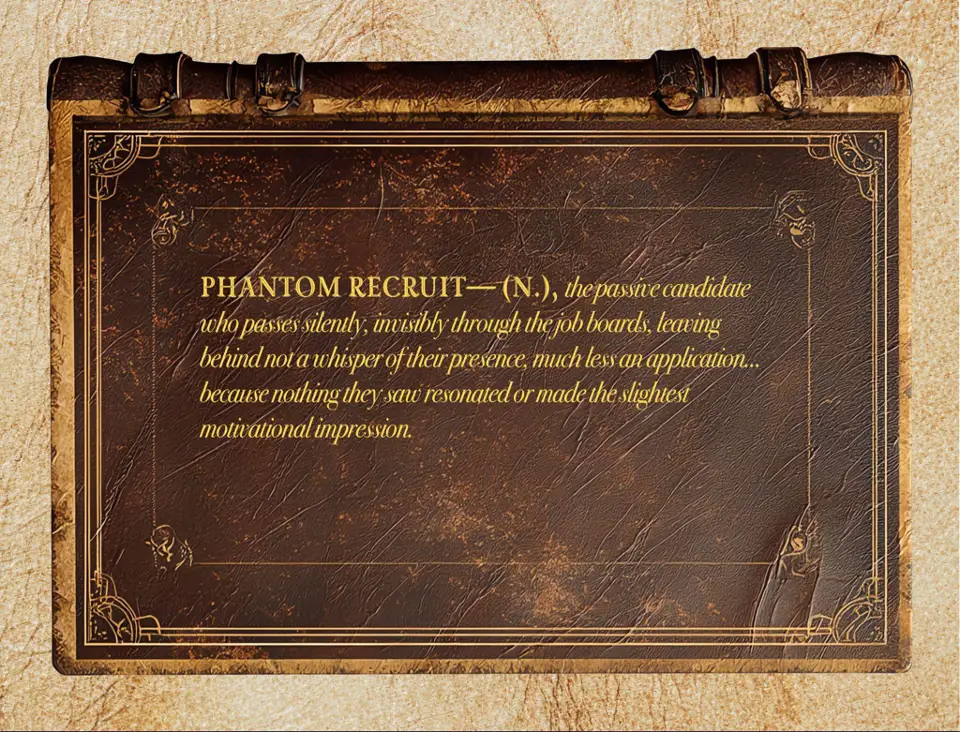
Be careful what you wish for. Try as you might to be patient and selective, inevitably time runs out and you find your back against the wall to fill the vacancy. The trap is to laser-focus on skills to put a competent body in a seat. Trouble is, you haven’t considered the whole person. You haven’t looked for the right mindset—the attitudes and beliefs that shape how a person will actually perform in your particular role.
You know compromises made in recruiting always come back to bite you. Something—or usually, more than one something—about the role doesn’t meet expectations. Sooner rather than later, the new hire becomes disillusioned. Dissatisfied.
Yes, that means higher turnover. But there’s an even greater, more pervasive, insidious cost: disengagement, and the lost productivity it causes. Not just for the disengaged. For everyone around them.
The numbers are as frightening as they are true
- Productivity is way down. Recent studies show most employees are unproductive for over 40% of their workday, with some studies showing active productivity less than 60% of the time.
- Distractions are a convenient excuse. It can take over 23 minutes to regain focus after checking Slack or email—but the disengaged feel little incentive to return to the task at hand.
- Global engagement is at an all-time low. According to Gallup, only 21% of employees globally were engaged at work in 2024, a two-point drop from 2023.
- U.S. disengagement is at an all-time high. 17% of U.S. employees qualify as actively disengaged—resentful and vocal about unmet needs, negatively impacting the entire work environment.
- The financial drain is staggering. Gallup estimates that actively disengaged employees cost the U.S. economy between $483 and $605 billion each year in lost productivity.
You can buck these trends
It all comes back to how you fill roles. Most job postings focus on attracting for skillset and selling the employer brand—rather than connecting with candidates who are a genuine fit for the role. The candidates you actually want, especially the employed “window shoppers,” need to feel the posting is calling their name. They need to see that what they value in themselves will be recognized and valued in that job.
The key: focus less on what you want from candidates and more on what they want to hear about all they can be in the role. When your posts emphasize mindset attributes—adaptability, curiosity, resilience, precision, independence, whatever the role truly demands—you start attracting people who will engage from day one and stay.
The payoff of getting this right
- Higher revenue. Highly engaged employees contribute to 23% higher profitability, according to Gallup.
- Increased sales. Sales productivity is 18% higher among highly engaged employees.
- Reduced turnover. High-engagement organizations experience 51% lower turnover rates.
- Improved customer loyalty. Customer engagement is 10% higher in organizations with a highly engaged workforce.
Every hire is either building that workforce or diluting it. The job post is where the outcome gets decided.